



June Calendars
Independent Living

Assisted Living

Memory Care

May Calendars
Independent Living

Assisted Living

Memory Care

April Calendars
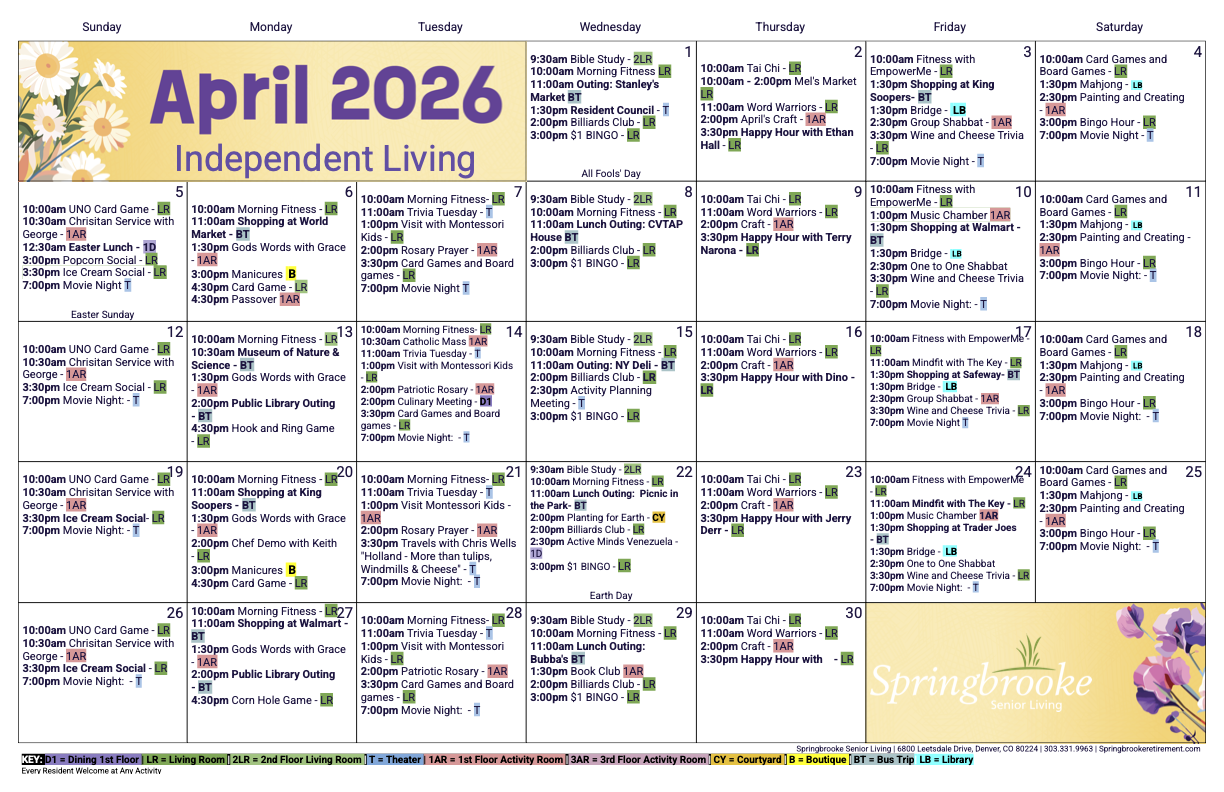
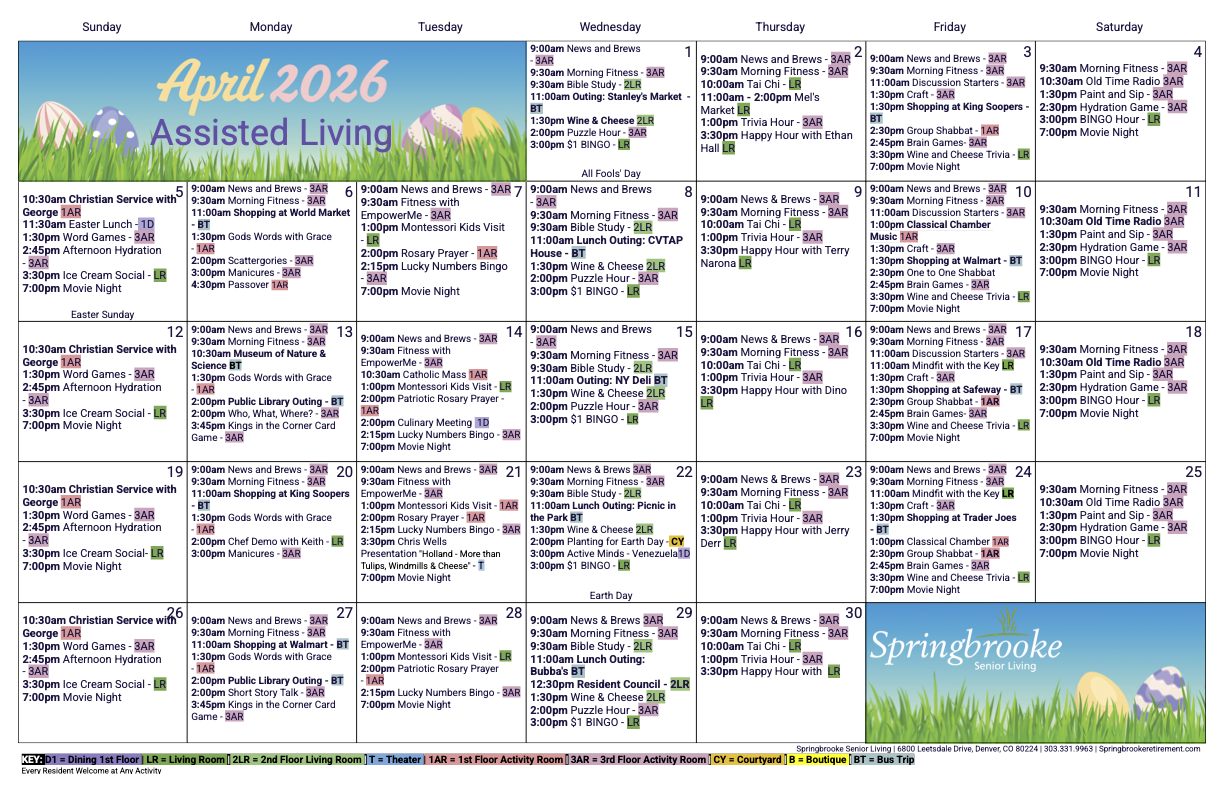

March Newsletter & Calendars


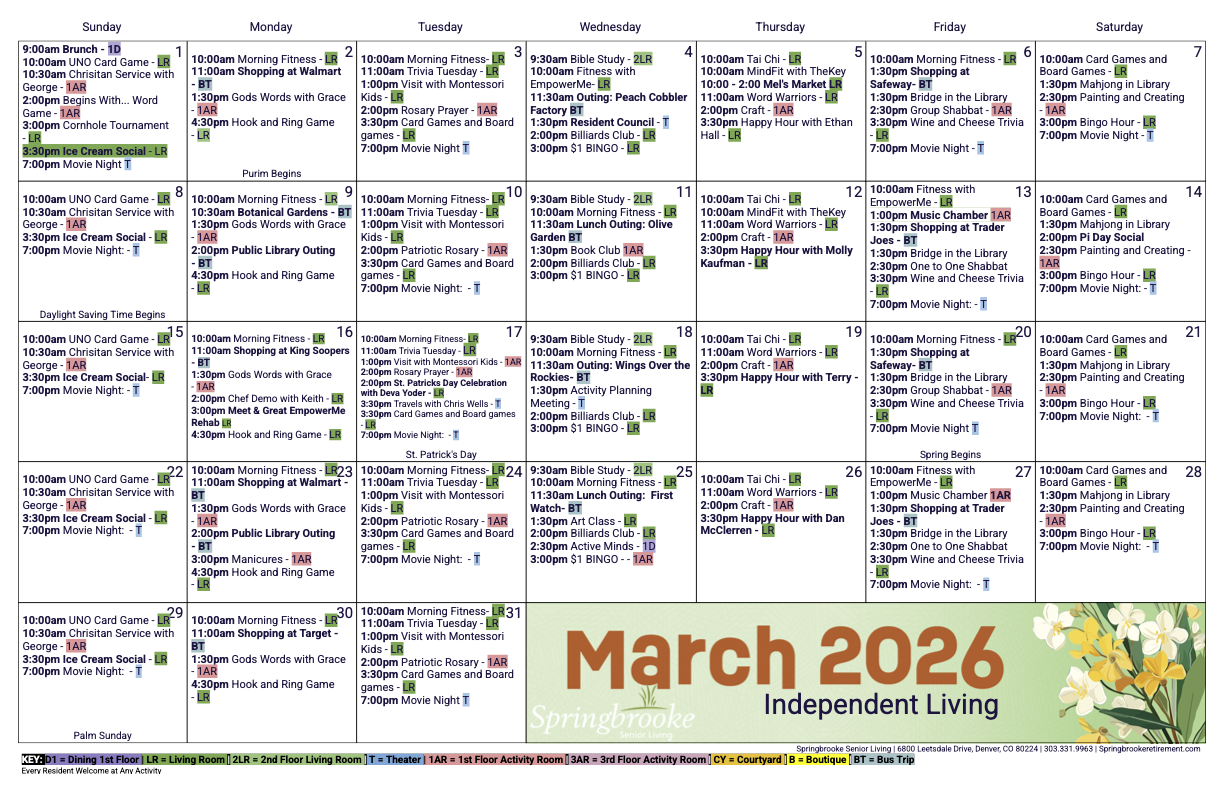
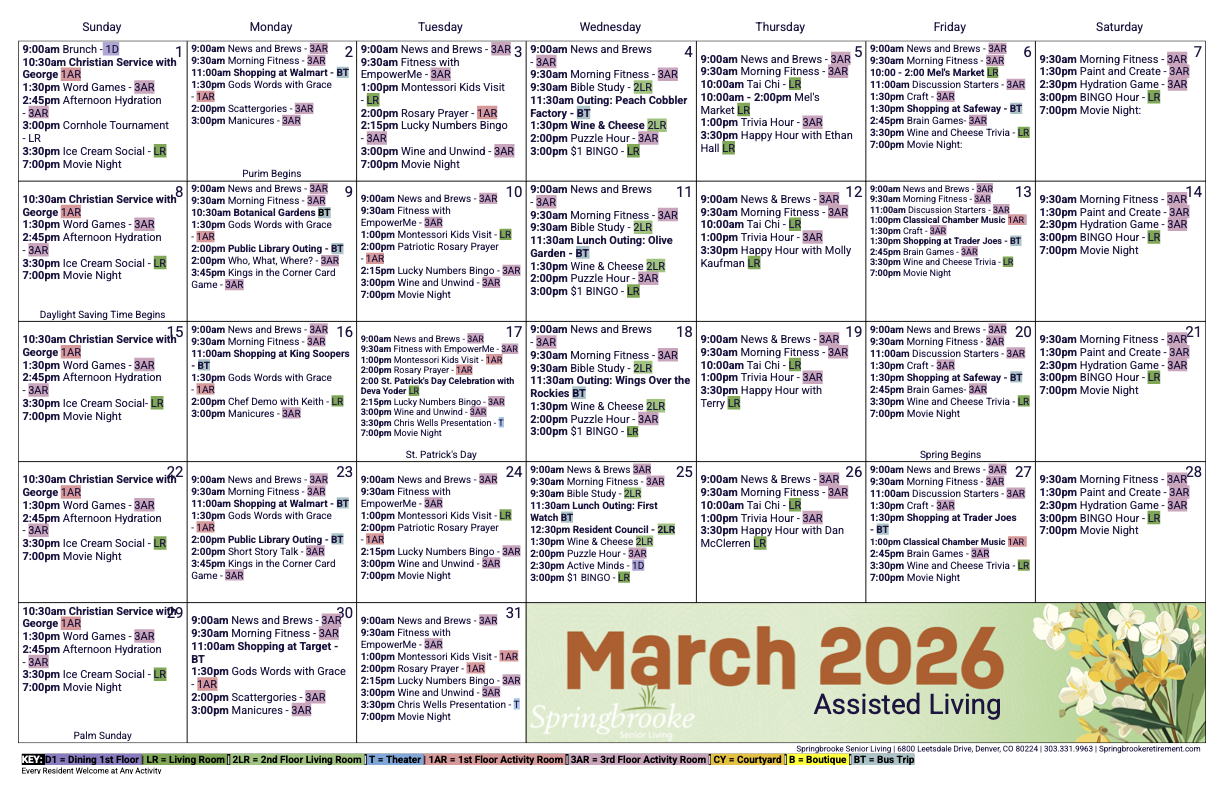

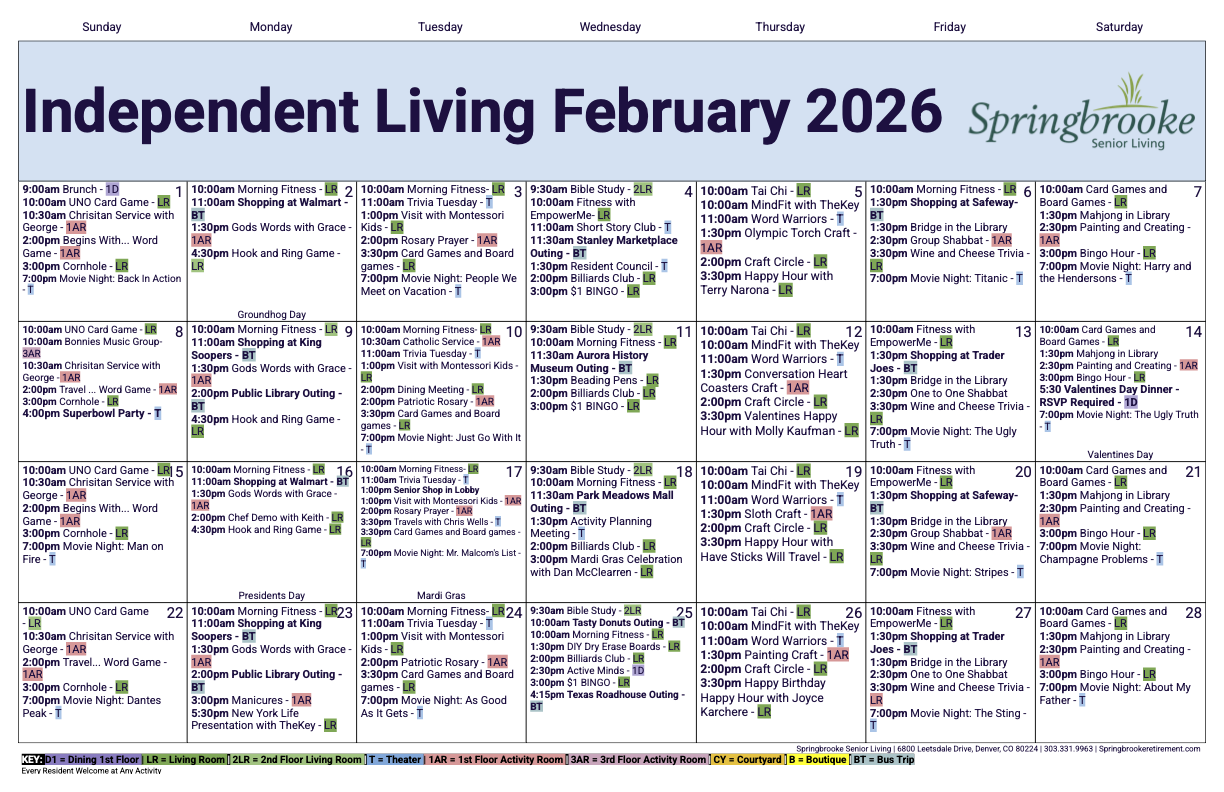
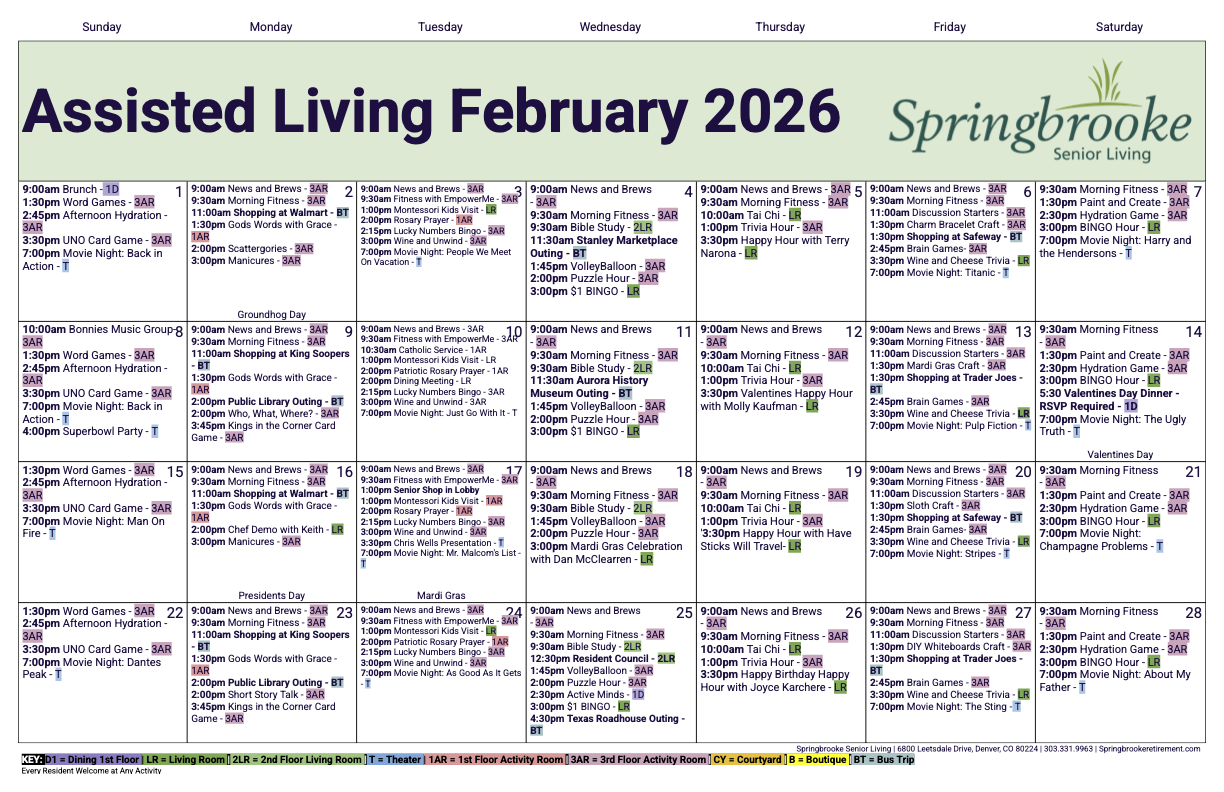
February Newsletter & Calendars



What to Look For in a Senior Living Community
Senior Living Communities
During the holidays, families often notice changes in the cognitive or physical abilities of aging parents. January is the ideal time to visit various senior living communities with your parents, siblings or trusted friends. Your loved one may not be moving right away, but narrowing your search for appropriate communities before a health event or to relieve your parents from the burdens of taking care of a home, cooking, cleaning and driving can provide everyone with peace of mind.
Senior communities come in all shapes and sizes, all price ranges and degrees of care, and all management structures. What’s the best fit for you and your family? Here’s a checklist of what to look for when touring senior living communities.
1. Convenience
For most seniors, staying in the neighborhood they’ve come to know and love is a priority. Maintaining connections with your parents’ local place of worship, favorite cultural gems, shopping, social groups and healthcare facilities might be a deciding factor in choosing a senior living community. Think about how long it will take to travel between these resources – and your commute as a caregiver. If you and your loved ones are living on opposite ends of the metroplex, you’ll be less likely to visit, take your parents to appointments or treat them to lunch. Closer is usually better for everyone.
2. Multiple levels of care
Communities generally fall into three levels of care: independent living, assisted living and memory care. Not all communities offer all levels of care. As people age, they tend to feel more comfortable in stable surroundings. Change becomes more difficult physically and emotionally, hence moving your senior into a full-spectrum community sooner rather than later may be a good idea.
You may also want to look for communities that offer multiple levels of care – and those that make it easy to move between levels. Seniors often start in independent living and supplement with special services, such as a helping hand with housekeeping, laundry or showering. Adults who qualify for assisted living usually need help with at least two of the following: meal preparation, personal hygiene, medication management and other activities of daily living. Note that some seniors actually improve functioning in assisted living and can move back to independent living. Better to have your senior move across the hall, rather than across town. Some communities allow seniors to take a trial run by scheduling a respite care visit.
3. Affordability
Sometimes the fanciest, newest community isn’t the best. Will your loved one actually use luxury amenities that add to the overhead cost? Look for communities where your loved one will feel welcomed, comfortable and financially secure.
4. Ownership
In recent years, there has been an explosion in large, corporate-owned senior care companies. Economies of scale may help bring down costs and standardize care in such facilities. In Denver, there are still many family-owned and unique senior living communities where the owners are involved with the welfare of residents. These folks often entered the industry out of a desire to help their aging parents or to create a place where they would want to live someday. Employees of these communities often cite a more flexible, responsive mindset in meeting resident needs.
5. Activities & Events
Even if your loved one isn’t a social butterfly, staying social as we age helps keep us mentally stimulated, healthy and connected with others. Look for communities that offer a full calendar of various activities – crafts, card clubs, book clubs, educational talks, outings, music, happy hours, interactions with students and more. Your senior probably won’t attend everything, but he or she will find people with like interests and be happier!
Communities should feel vibrant and energetic when you walk through the door. Are there residents in the common areas? Do you spy seniors playing jigsaw puzzles and card games or getting ready for an outing? Does the entryway feel like a corporate hotel or an inviting clubhouse?
6. Inclusion
Your loved ones may value an environment where they mingle freely with those of various religious beliefs or none at all, those of various racial or cultural backgrounds, and those of different political persuasions. There are communities that foster such inclusion and others that cater to various religions, races and other persuasions. You know best which type of community makes your loved ones comfortable.
7. Accreditations & Referrals
Check with the Colorado Department of Public Health to confirm that a community is licensed and in good standing. Then, ask around! What do your friends, family and acquaintances recommend? Create a short list of candidates, verify their credentials and then grab your coat for a tour!
Now is the time to narrow your senior retirement living choices.
Tour now to develop a short list of good options in case your senior may have to make a move.
For more information or to tour Springbrooke, contact 303.331.9963 or marketing.springbrooke@elkco.net
Springbrooke's Storytime Library
Read for a good story? Talented Springbrooke residents have recorded their favorite children’s stories online. Watch them now!
Maxine reads “Zoo Alphabet 1 2 3”
Deborah reads “If You Give A Pig A Party”
Mary reads “The Napping House”
Harry reads “Knights Are Brave”
The entire library can be found on Springbrooke Senior Living’s YouTube channel.